Events
Conversations that inform, educate and inspire
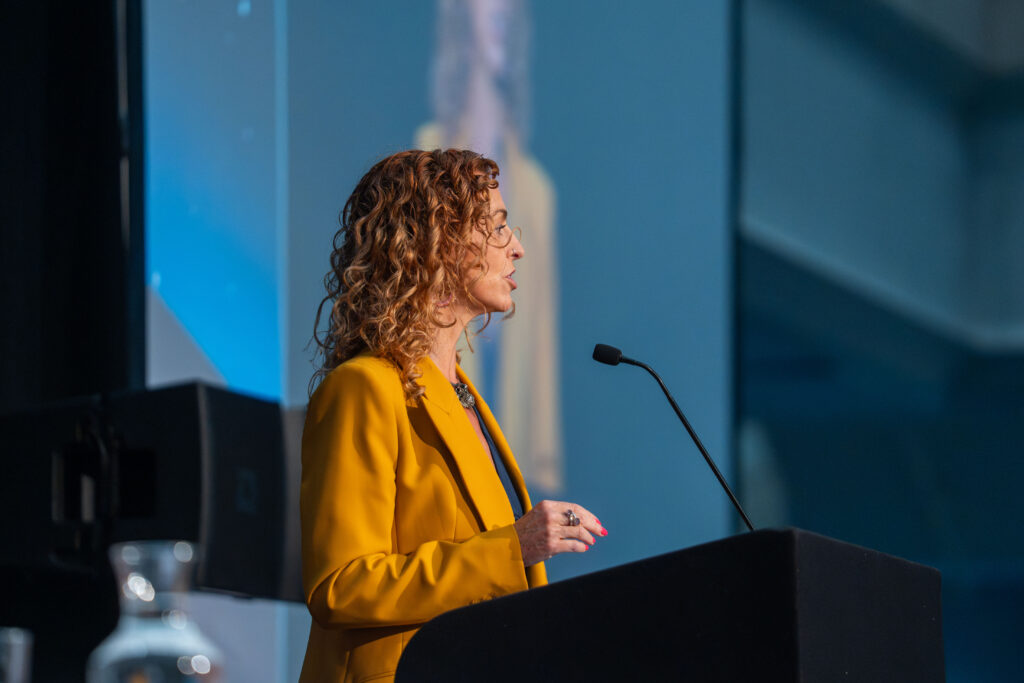
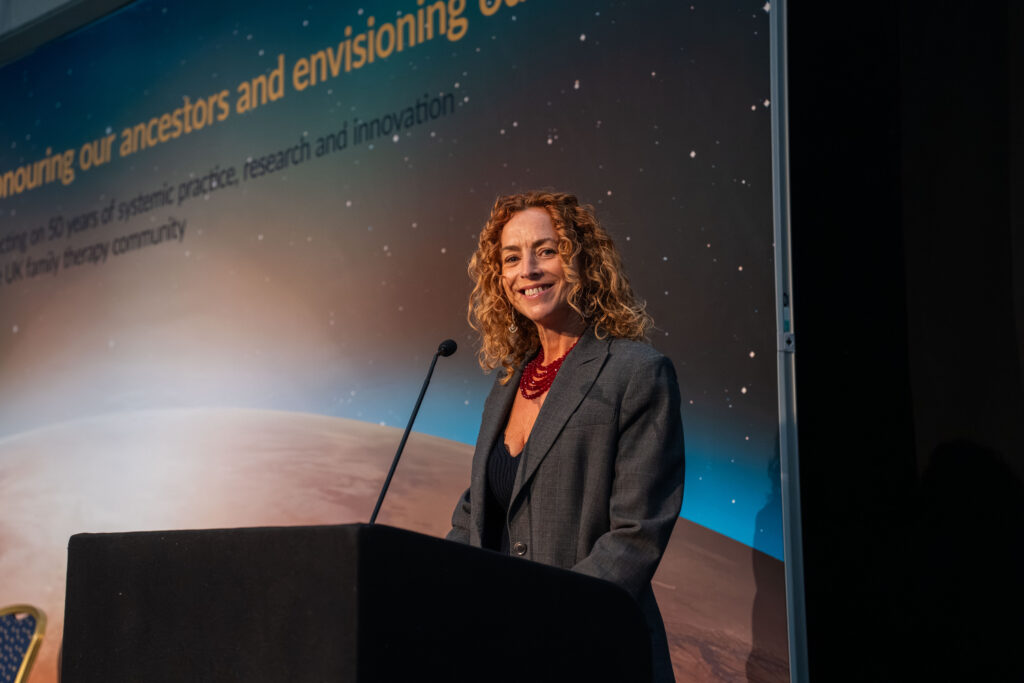
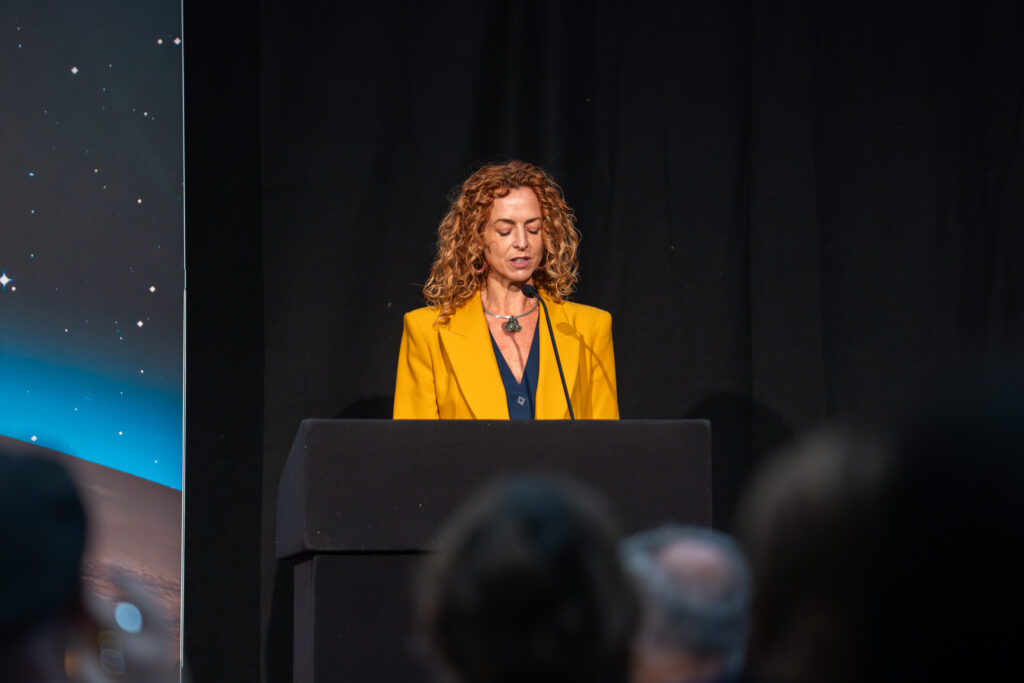
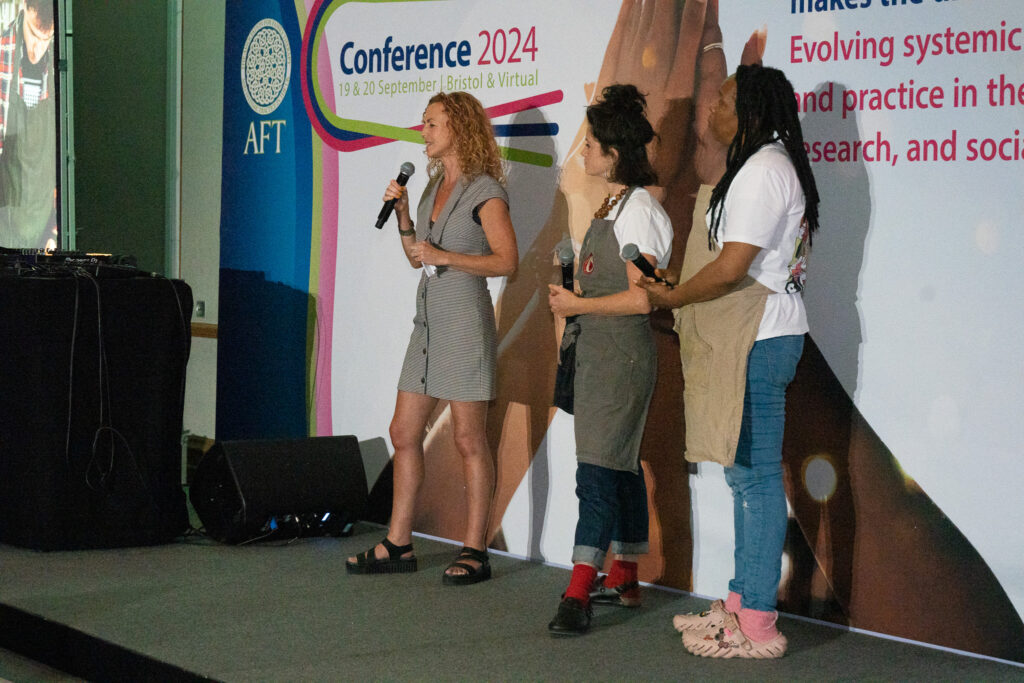
I regularly speak at events that explore, share, and deepen understanding of systemic thinking and clinical practice in mental health. These events span both public and private sectors and include keynote lectures, panel discussions, teaching sessions, and collaborative workshops. They bring together practitioners, students, researchers, and leaders from across the mental health field.
Each session offers space for learning, reflection, and dialogue—whether focused on therapeutic practice, service innovation, or leadership in mental health care. My contributions are grounded in evidence-informed experience and guided by a commitment to ethical, inclusive, and forward-thinking approaches.
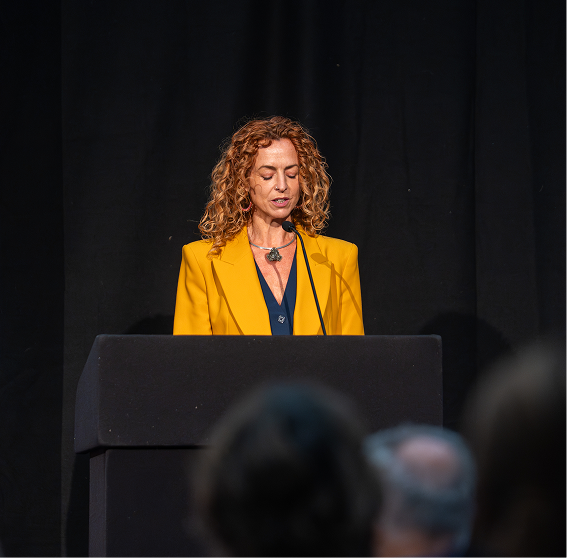
About these inspiring events
Upcoming events
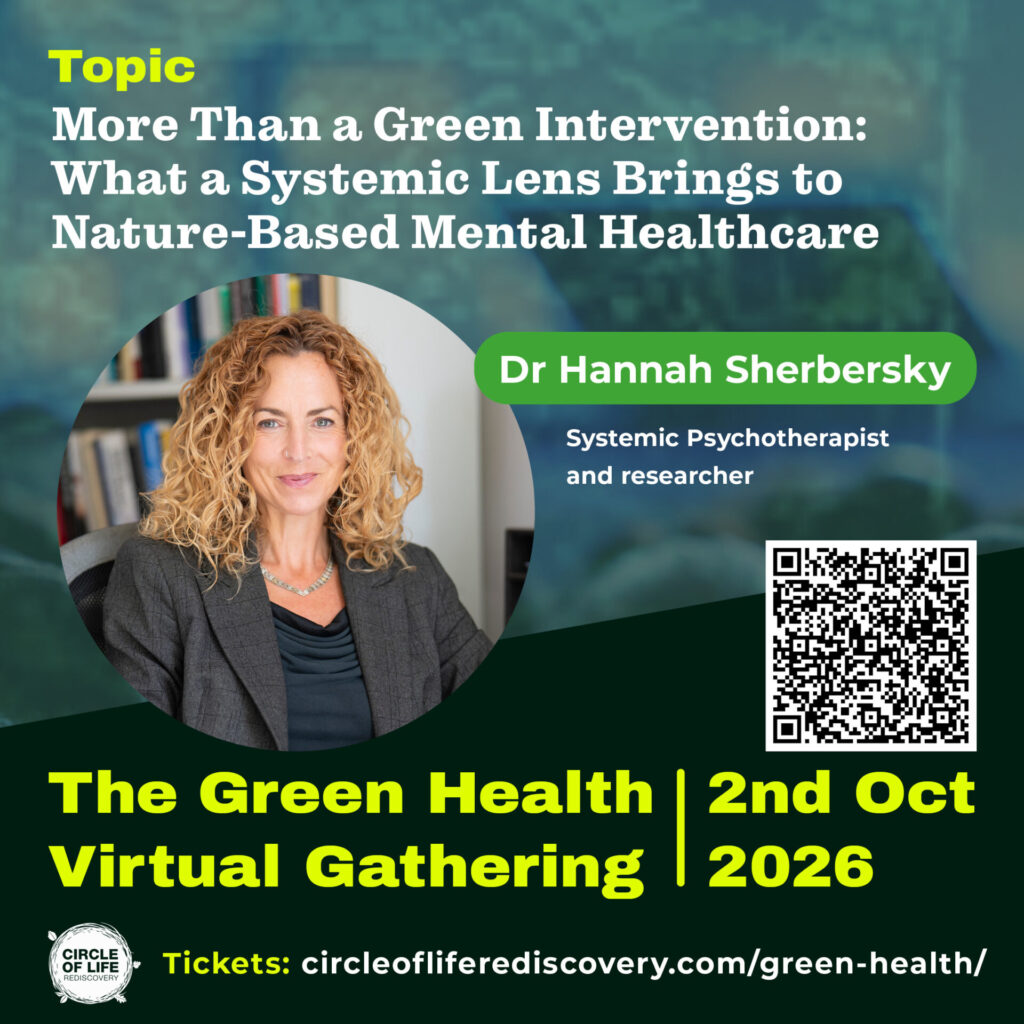
The Green Health Virtual Gathering 2026
- Event Start: October 2, 2026
- Event End: October 2, 2026
- Online
“More than a green intervention: What a systemic lens brings to nature-based mental health care.”
Embedding Nature in Practice – From Vision to Delivery
The focus is on professional healthcare delivery, implementation and systems integration, rather than broad nature connection or wellness-based approaches. Across the morning, speakers including psychiatrists, primary care leaders and practitioners working across CAMHS, adult mental health and integrated care settings will explore governance, evidence, prescribing, professional competence and the realities of embedding this work into existing healthcare pathways.
Led by Marina Robb BSc; PGCE; MA; MSc, founder of Circle of Life Rediscovery, the gathering is designed for professionals moving from interest into implementation. Through keynote perspectives, practitioner case studies and live discussion, participants will gain practical insight into current approaches across services, what credible practice looks like in healthcare settings, the evidence shaping the field, and the key opportunities and challenges involved in real-world delivery.
THIS IS JUST A NOT A WEBINAR
This is a live event for professionals to discuss and demonstrate how to move from interest to implementation.
WHY THIS MATTERS NOW
Nature-based approaches are gaining traction across health and social care.But moving into delivery raises real questions:
- What does safe, credible and effective practice look like in real-world settings?
- What evidence is needed – and what already exists?
- How do we embed this within real systems and pathways?
WHAT YOU’LL EXPERIENCE
- Clinical insight from practising psychiatrists
- System-level perspectives from primary care
- Real-world case studies (CAMHS, adult mental health, foster care)
- Short expert inputs on governance and prescribing
- Live panel discussion
- Interactive design session shaping what comes next

‘Power, feminism and intersectionality in action’
- Event Start: April 22, 2027
- Event End: April 22, 2027
- Online
Systemic CPD workshop – for the Surrey Hampshire Family Therapy and Systemic Practice Collaborative.
Further details to follow…
Recent events
- Event Start: September 23, 2026
- Event End: September 23, 2026
Therapy for Depression: The Exeter Model and Integrating Sex & Intimacy Approaches – Learning online with COSRT
Psychosexual and Relationship Therapy Training
Explore Couple Therapy for Depression (CTfD) and the Exeter Model, integrating strategies for addressing sex and intimacy in relational contexts to enhance therapeutic outcomes with Professor Hannah Sherbersky.

- Event Start: September 15, 2026
- Event End: September 15, 2026
Emergent Patterns in Practice – a reflective systemic training series – Chapter 5
When Decolonial Ideas Travel: What Are We Decolonising, and For Whom?
This immersive training series invites practitioners into a playful, reflective, and deeply relational space where systemic ideas come alive in dialogue. Led by Professor Hannah Sherbersky, each session explores the patterns that shape our work and homelives — the spoken and unspoken, the visible and the subtle — and offers opportunities to experiment, collaborate, and co-create new possibilities. At a time of climate crises and polarised thinking, and whether you’re a therapist, supervisor, system-oriented practitioner, or just a curious deep thinker, this series offers a rich blend of theory, experiential learning, and creative dialogue. Together with professionals working across a range of arts, health and science contexts, we trace spirals of meaning, notice constellations of connection, and cultivate the capacity to work with complexity in ways that are grounded and ethical.
When Decolonial Ideas Travel: What Are We Decolonising, and For Whom?
Decolonial ideas have found increasing presence within systemic and therapeutic practice. Yet, as these ideas travel across contexts, they carry their own risks of displacement arriving as frameworks to be adopted rather than questions to be lived.
This conversation does not begin with a claim of difference. It begins with an invitation to inquiry. Practitioners in postcolonial Asian contexts do not engage decolonial scholarship from outside its concerns, we engage from within the same entanglement of colonial inheritance, epistemic disruption, and the ongoing work of recovering what was interrupted. What we bring is not a corrective to traditions developed through Black, Indigenous, and Western academic frameworks, but a situated accompaniment: voices that know what it is to practise at the intersection of multiple sovereignties; linguistic, spiritual, political, familial; without the luxury of resolving them.
Drawing on systemic psychotherapy, community practice and inclusive practice training in Singapore, this conversation explores decoloniality not as a fixed framework, but as a live and relational practice of attending. We are interested in what becomes possible when we ask not only who is centred in our theories, but what kinds of living our theories can hold. The realities we encounter clinically and communally, multi-generational displacement, the psychospiritual costs of assimilation, the weight of racialised respectability, the erosion of indigenous relational cosmologies under modernising states, and the quiet everyday resistance embedded in how families care for one another, are not exceptional conditions. They are the ordinary texture of postcolonial Asian life.
We argue for an approach that is inclusive not by flattening difference, but by attending to the geopolitical, socio-spiritual and relational conditions within which all practitioners and all clients are embedded. Decoloniality, practised this way, becomes less about drawing lines between traditions and more about recovering the capacity to be curious about history, about power, about whose knowledge gets to matter, and about what forms of relationship might still make repair possible.
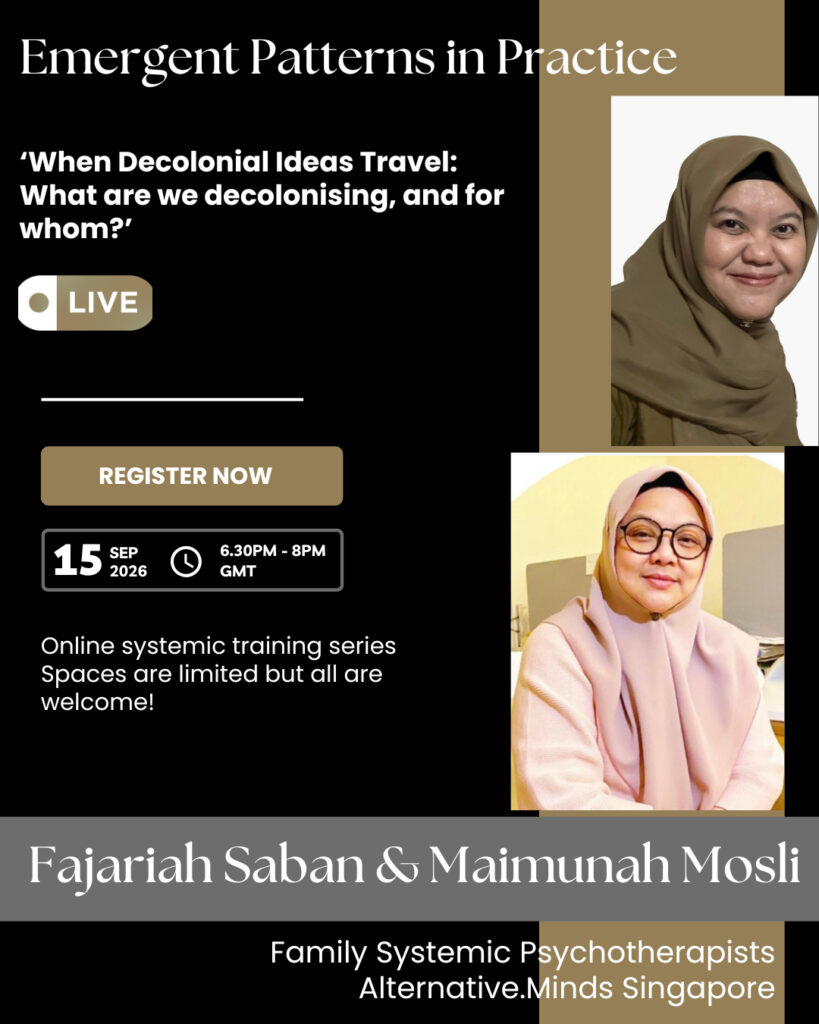
- Event Start: July 14, 2026
- Event End: July 14, 2026
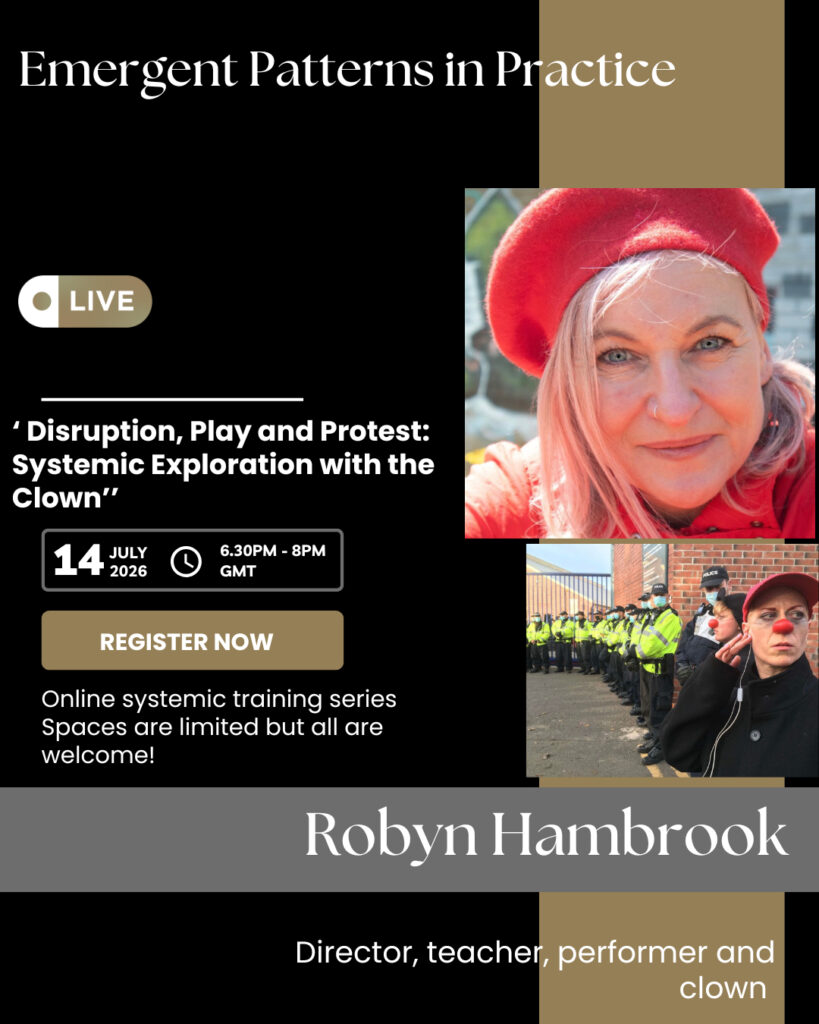
Emergent Patterns in Practice – Chapter 4
‘Disruption, Play and Protest: Systemic Exploration with the Clown’
With Robyn Hambrook
This immersive training series invites practitioners into a playful, reflective, and deeply relational space where systemic ideas come alive in dialogue. Led by Professor Hannah Sherbersky, each session explores the patterns that shape our work and homelives — the spoken and unspoken, the visible and the subtle — and offers opportunities to experiment, collaborate, and co-create new possibilities. At a time of climate crises and polarised thinking, and whether you’re a therapist, supervisor, system-oriented practitioner, or just a curious deep thinker, this series offers a rich blend of theory, experiential learning, and creative dialogue. Together with professionals working across a range of arts, health and science contexts, we trace spirals of meaning, notice constellations of connection, and cultivate the capacity to work with complexity in ways that are grounded and ethical. In this next special Emergent Patterns in Practice session, Professor Hannah Sherbersky is joined by Robyn Hambrook for an evening of systemic curiosity about how patterns of connection, disruption, and meaning emerge across play, activism, and public life. Drawing on systemic ideas and the creative provocations of clowning, the workshop explores how humour, transgression, and not-knowing can surface hidden dynamics, challenge power, and open new relational possibilities. Clowns, as tricksters, expose what is often left unsaid – offering a lens for working with uncertainty, difference, and tension in ways that are both ethical and generative.
Participants will engage in dialogue and creative inquiry to consider how we work with complex relational systems – whether in therapy, communities, or moments of social change -foregrounding responsiveness over certainty, and collaboration over fixed outcomes. Clowns have always been society’s tricksters – a subversive force, exposing truths, mocking power, healing and critiquing through disruption, transgression and play. For the past eight years Robyn Hambrook has been researching at the intersection of clowning, activism and the politics of public space. Her work examines the clown through the lens of non-violent direct action; dissecting how the tools and tactics the activist clown can bring to the front line of protest and their power to bring about real and lasting change.
Bio: Robyn is a Bristol-based director, teacher and performer. With over 20 years’ experience she is passionate practitioner of clowning, physical theatre, circus and street arts. For the past seven years she has been exploring the meeting point of clowning, politics and a deep desire to address the injustices in the world. This specialism has developed through her master’s Research, on the streets and in protests with the Bristol Rebel Clowns and in research residencies with the Nomadic Rebel Clown Academy.
Keen to explore the intersection of clowning and politics, Robyn is driven to create collaborative, research spaces, testing and pushing the limits of the artform to create new knowledge and methodologies for her industry and strengthen partnerships for future work. Some of her most recent collaborations and teaching projects have included the Nomadic Rebel Clown Academy (5-day Activist Clown Training), The Laboratory of the Un-beautiful (Feminist Grotesque Bouffon Training for Womxn Theatre Makers) and the Clown Congress (annual gathering of clowns, activists & academics collectively exploring what it means to be a clown in this current era). Robyn has most recently founded the Bristol Clown School, creating a home for clowning in the Southwest of England.
WEBSITES
www.robynhambrook.com
www.bristolclownschool.co.uk
INSTA
@robynonfire
@bristolclownschool
Robyn Hambrook
At the University of Exeter, Hannah is Deputy Director of the clinical training department CEDAR, Psychology, and Director of the Systemic Portfolio. She is dedicated to expanding access to systemic ideas through innovative formats and continues to practice clinically as a psychotherapist and supervisor. Her work also includes contributions to a BBC documentary, an online couple therapy app, and various podcasts. She presents internationally and has published widely on various systemic ideas.
What you’ll gain from these sessions:
- A deepened understanding of systemic theory and relational frameworks
- Practical tools for working with complexity and uncertainty
- Enhanced confidence in co-creating change through dialogue and experimentation
- Creative integration of systemic ideas into your practice
- A community of practice with likeminded and transdisciplinary colleagues
Who can attend:
- Curious thinkers
- Relationship therapists
- Clowns and theatre practitioners
- Family and Systemic psychotherapists
- Mental health practitioners
- Supervisors and trainers
- Other professionals seeking relational depth
Practical details:
- Date & Location: Online – 14th July 2026 – 6.30 – 8pm GMT.
- Cost & Registration: From £27.80
Contact and ticket: Eventbrite – see link.
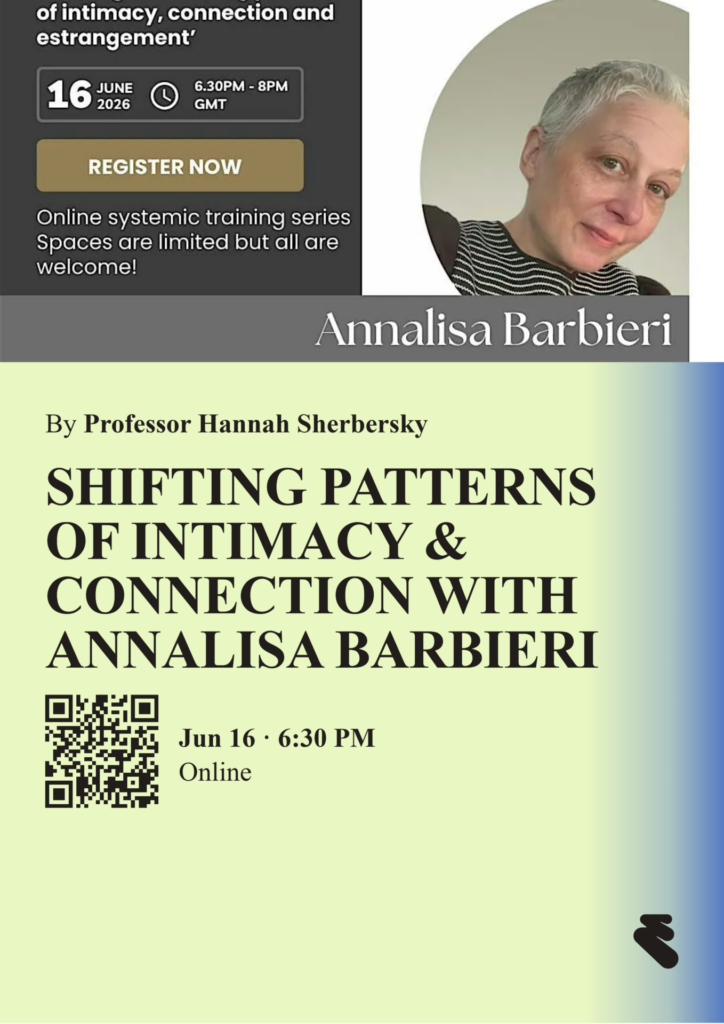
- Event Start: June 16, 2026
Emergent Patterns in Practice – Chapter 3
‘Tracing the shifting patterns of intimacy, connection and estrangement’
With Annalisa Barbieri
This immersive training series invites practitioners into a playful, reflective, and deeply relational space where systemic ideas come alive in dialogue. Led by Professor Hannah Sherbersky, each session explores the patterns that shape our work and homelives — the spoken and unspoken, the visible and the subtle — and offers opportunities to experiment, collaborate, and co-create new possibilities. At a time of climate crises and polarised thinking, and whether you’re a therapist, supervisor, system-oriented practitioner, or just a curious deep thinker, this series offers a rich blend of theory, experiential learning, and creative dialogue. Together with professionals working across a range of arts, health and science contexts, we trace spirals of meaning, notice constellations of connection, and cultivate the capacity to work with complexity in ways that are grounded and ethical.
In this next special Emergent Patterns in Practice session, Professor Hannah Sherbersky is joined by Annalisa Barbieri, long-standing advice columnist and journalist, and host of Conversations with Annalisa Barbieri, for an evening of systemic curiosity about the relational dilemmas of our time. Advice columns are a unique social archive: thousands of private struggles, offered to a public space, revealing what people hope for, fear, endure and repeat. Together we’ll ask: How have relationship problems shifted over the years? Which themes remain stubbornly familiar, and which feel newly shaped by contemporary life? We’ll pay particular attention to digital intimacy – the ways phones, apps, messaging and online visibility can intensify longing, jealousy, misunderstanding, rupture, or repair, and to emerging patterns such as estrangement, where cutting off contact can seem like the only route to safety or sanity, yet rarely ends the story cleanly. The format is a lively conversation (part interview, part shared inquiry) with time for Q&A, followed by a practice-based discussion where participants will map dilemmas as interactional patterns – including the often-unseen digital and cultural forces that shape them- and experiment with systemic questions that invite alternative meanings and next steps. Come to think, listen, and notice what’s emerging – in relationships, in culture, and in us.
Bio: Annalisa Barbieri is a journalist, writer, and long‑standing advice columnist for The Guardian, where she writes the much‑loved Ask Annalisa column. She is also the host of the podcast Conversations with Annalisa Barbieri, in which she speaks with clinicians, thinkers and writers about the psychology of everyday life and relationships.
Over many years of responding to readers’ dilemmas, Annalisa has developed a rare vantage point on how intimacy, family life and personal struggle are shaped by culture, power, and social change. Her work is known for its warmth, psychological depth, and unwavering commitment to compassion, complexity, and honesty.
What you’ll gain from these sessions:
- A deepened understanding of systemic theory and relational frameworks
- Practical tools for working with complexity and uncertainty
- Enhanced confidence in co-creating change through dialogue and experimentation
- Creative integration of systemic ideas into your practice
- A community of practice with likeminded and transdisciplinary colleagues
Who can attend:
- Curious thinkers
- Relationship therapists
- Family and Systemic psychotherapists
- Mental health practitioners
- Supervisors and trainers
- Other professionals seeking relational depth
Practical details:
- Date & Location: Online – 16th June 2026 – 6.30 – 8pm GMT.
- Cost & Registration: From £27.80
- Event Start: May 21, 2026
- Event End: May 22, 2026
Working with systems: revisiting a systemic lens for clinical practice
Join us for a two-day interactive workshop introducing systemic theory and its practical application to your clinical settings.
On Day 1, you’ll explore the foundations of systemic thinking—how patterns, relationships, and context shape our psychological work. I will provide a comprehensive overview of systemic principles, exploring key models and concepts that shape systemic thinking. Through interactive discussions and creative exercises, participants will explore this theoretical framework.
On Day 2, we move from theory to practice – and deepen our thinking. In small, supported groups, you’ll apply systemic principles to clinical scenarios including team development and supervisory work. You will develop formulations, plan systemic team interventions and consider systemic leadership ideas you can take back to your service.
This workshop is ideal for psychologists, managers, psychotherapists and supervisors, who want fresh perspectives and practical tools to enrich their work with individuals, families, teams and organisations. We will think together about the application of ideas in community, inpatient and leadership settings. This is an opportunity to think systems!
- Event Start: May 12, 2026
- Event End: May 12, 2026
Emergent Patterns in Practice – a reflective systemic training series – Session 2
‘Systemic Oppression – From Hating to Hoping and the Internalised Other’
Dr Dwight Turner
This immersive training series invites practitioners into a playful, reflective, and deeply relational space where systemic ideas come alive in dialogue. Led by Professor Hannah Sherbersky, each session explores the patterns that shape our work and homelives — the spoken and unspoken, the visible and the subtle — and offers opportunities to experiment, collaborate, and co-create new possibilities. At a time of climate crises and polarised thinking, and whether you’re a therapist, supervisor, system-oriented practitioner, or just a curious deep thinker, this series offers a rich blend of theory, experiential learning, and creative dialogue. Together with professionals working across a range of arts, health and science contexts, we trace spirals of meaning, notice constellations of connection, and cultivate the capacity to work with complexity in ways that are grounded and ethical.
In this next workshop, Hannah will be in conversation with Dr Dwight Turner about systemic oppression and finding hope in troubled times. The politicisation of transphobia, the hatred embedded within the Manosphere, war in the Middle East, and the global Climate Crisis. There is so much for us to be afraid of in the current cultural climate. It can feel that this is a very bleak time. Clients feel fear and anxiety, there is an undoubted rise in mental health conditions linked with these wider societal issues, and for many of us in the helping professions, it can often feel like so much of what we are doing is fruitless.
Yet, there will always be shoots of hope. This session, which will be part presentation, part discussion between Hannah and Dwight, and part a wider exploration of just how we might approach these themes, will involve all of us using the skills that we have as practitioners, or just as fellow human beings, to return to our world that which it most importantly needs, hope.
Bio: Dr Dwight Turner is Course Leader on the Humanistic Psychotherapy Course at the University of Brighton, and a psychotherapist and supervisor in private practice. Dr Turner is the author of Decolonising Counselling and Psychotherapy: Depoliticised pathways towards intersectional practice (2025), The Psychology of Supremacy (2023), and Intersections of Privilege and Otherness in Counselling and Psychotherapy (2021). All are published by Routledge.
An Intersectional Psychotherapist, Dr Turner is an experienced conference speaker. He can be contacted via his website www.dwightturnercounselling.co.uk or on social media on LinkedIn, Threads, or on BlueSky at @dturner300.
At the University of Exeter, Hannah is Deputy Director of the clinical training department CEDAR, Psychology, and Director of the Systemic Portfolio. She is dedicated to expanding access to systemic ideas through innovative formats and continues to practice clinically as a psychotherapist and supervisor. Her work also includes contributions to a BBC documentary, an online couple therapy app, and various podcasts. She presents internationally and has published widely on various systemic ideas. Her latest training initiative is an Eco-Systemic Psychotherapy programme developed in collaboration with Roger Duncan at the University.
What you’ll gain from these sessions:
- A deepened understanding of systemic theory and relational frameworks
- Practical tools for working with complexity and uncertainty
- Enhanced confidence in co-creating change through dialogue and experimentation
- Creative integration of systemic ideas into your practice
- A community of practice with likeminded and transdisciplinary colleagues
Who can attend:
- Curious thinkers
- Relationship therapists
- Family and Systemic psychotherapists
- Mental health practitioners
- Supervisors and trainers
- Other professionals seeking relational depth
Practical details:
- Date & Location: Online – 12th May 2026 – 6.30 – 8pm GMT.
- Cost & Registration: From £27.80

- Event Start: April 24, 2026
- Event End: April 24, 2026
Forum for Inpatient Child and Adolescent Psychology Services (FICAPS) Conference – Safe Spaces: Enhancing Psychological Safety in Inpatient CAMHS
The FICAPS conference is dedicated to improving therapeutic environments within inpatient Child and Adolescent Mental Health Services. Aimed at the clinical psychologists working in inpatient CAMHS, it will explore innovative strategies to foster psychological safety, strengthen therapeutic relationships, and create a supportive climate that promotes healing and resilience.
Through keynote talks, interactive workshops, and shared experiences, delegates will gain practical insights to enhance their practice and support their team in delivering high quality psychological care.
My presentation at the event
I will be presenting a keynote speech on my doctoral research: “Notions of home within an adolescent inpatient unit, and implications for staff training.”
- Event Start: April 14, 2026
- Event End: April 14, 2026
Emergent Patterns in Practice – a reflective systemic training series – Session 1
This immersive training series invites practitioners into a playful, reflective, and deeply relational space where systemic ideas come alive in dialogue. Led by Professor Hannah Sherbersky, each session explores the patterns that shape our work and homelives — the spoken and unspoken, the visible and the subtle — and offers opportunities to experiment, collaborate, and co-create new possibilities. At a time of climate crises and polarized thinking, and whether you’re a therapist, supervisor, system-oriented practitioner, or just a curious deep thinker, this series offers a rich blend of theory, experiential learning, and creative dialogue. Together with professionals working across a range of arts, health and science contexts, and drawing on the work of Nora Bateson, Dave Snowdon and others, we trace spirals of meaning, notice constellations of connection, and cultivate the capacity to work with complexity in ways that are grounded and ethical.
Collaborators include national and international family and systemic psychotherapists, as well as psychologists and therapists from other disciplines such as dramatherapy, psychoanalytic psychotherapy and play therapy. They also include colleagues working in specialist areas such as gender and sexual diversity, perinatal care, spirituality, mindfulness, foster care, decolonising literature and folklore, participation and co-production, couple therapy, ecology, intercultural work, community-focussed research around food systems, activism and social justice, as well as radical approaches to mental health research, and the intersections of clowning and politics. They include those working in a wider systemic community; those in business, community development, local politics, post-colonial literature and poetry and even a colleague from the Nomadic Rebel Clown Academy! Our shared endeavour is to explore the emergent patterns of communication and interaction within our communities, and to invite deep thinking and listening to the systemic stories we share.
First series of collaborators (and there will be more!): Dr Lorna Hobbs, Maimunah Mosli Baffour Ababio, Professor Claire Pettinger, Dr Reenee Singh, Martin Gill, Fajar Saban, Robyn Hambrook, Mark Rivett, Di Gammage, Kate Groucutt, Olivia Doherty, Roderick Peake, Jo Hogan, Professor Emily Zobel Marshall, Dr Julia Wahl. More details about the collaborator profiles to follow.
What you’ll gain:
- A deepened understanding of systemic theory and relational frameworks
- Practical tools for working with complexity and uncertainty
- Enhanced confidence in co-creating change through dialogue and experimentation
- Creative integration of systemic ideas into your practice
Who can attend:
- Curious thinkers
- Relationship therapists
- Family and Systemic psychotherapists
- Mental health practitioners
- Supervisors and trainers
- Other professionals seeking relational depth
Practical details:
- Dates & Location: Online. The second Tuesday of every month – starting 14th April 2026. Moving towards fortnightly in due course.
- Cost & Registration: From £27.80
- Contact and ticket: Eventbrite – see link.
In the first workshop, Hannah will set the scene, provide some basic understanding of systems thinking, and start to explore how we can shift paradigms. This opening session invites us to step into the spiral together — to arrive, to orient, and to begin noticing the patterns that shape our work. We will explore the foundations of systemic theory and family therapy practice, not as abstract ideas, but as living, breathing ways of seeing and relating.
During the session together, we will trace the roots of systemic thinking: how families organise themselves, how patterns emerge and repeat, and how meaning is co-created in relationships. We will consider the shift from linear explanations to circular ones, from “what is wrong?” to “what is happening between us?”, and from individual stories to relational ones.
This session offers a grounding introduction for those new to systemic practice, a reflective re-entry point for those returning to these ideas with fresh eyes and an opportunity to start cultivating our new community of practice. Each of the following sessions will stand alone but will also be an opportunity to start growing our community. Following this first workshop in April, other collaborators will join Hannah on a journey together and dates and further information will follow. Certificates of attendance are available on request.

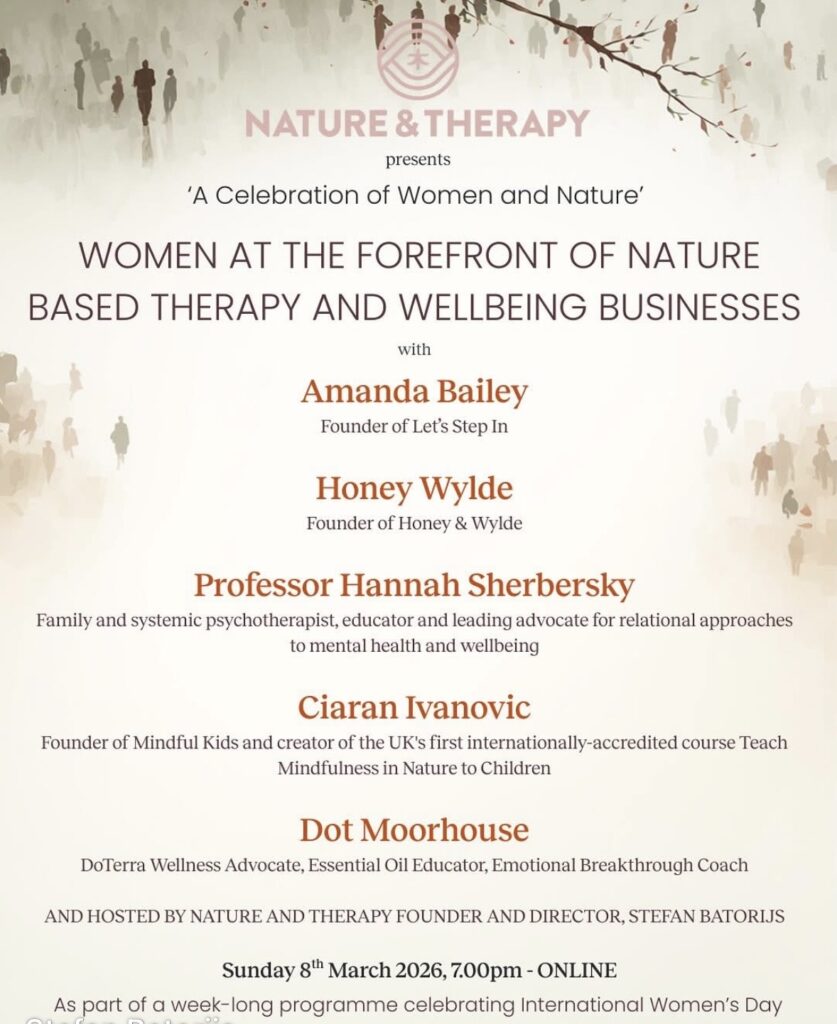
- Event Start: March 8, 2026
- Event End: March 8, 2026
A Celebration of Women and Nature
Women at the forefront of nature based therapy and wellbeing businesses – Panel discussion
Looking forward joining this special panel event on 8th March 2026 with Nature and Therapy UK, celebrating International Women’s Day.
🌿 Stefan Batorijs, the Founder and Director of Nature and Therapy UK will host the five of us in discussion about Nature-Based Therapy and Wellbeing Businesses in the UK.
🌳 This is an event to celebrate the work women are doing in Nature, with Nature and supported by Nature, set to inspire all those in their own Nature-based work and to invite an ever deepening connection…
🌱 I will be joining Amanda Bailey: Founder of Let’s Step in, Honey Wylde: Founder of Honey & Wylde, Ciaran Ivanovic: Founder of Mindful Kids, and Dot Moorhouse: Emotional Breakthrough Coach.
🌻 Join us in our discussion and celebration! Details and link below:
- Event Start: December 5, 2025
COSRT Winter Conference – What is Relationship Therapy?
It’s my pleasure to be presenting at the College of Sexual and Relationship Therapists’ winter conference in December.
The conference will be looking at the rich history of Relationship Therapy and how it continually adapts to meet changing needs.